- June 102026
XtrAIn is now available on arxiv.
- May 202026
Explainable Weight Perturbations (XWP) now published!
- May 122026
MSc thesis now available!
- May 102026
My personal webpage is now up and running!
I am a Mathematician with a Master's degree in Machine Learning, driven by a passion for applying theoretical principles to real-world challenges.
My journey began as a Software Developer, where I spent over three years on data-driven applications and research (social network analysis, efficiency in maritime engineering). Today, my work centers on Deep Learning and Explainable AI, a direction attempting to unravel the foundational mechanisms behind AI models.
My research journey began with contributions to 'iHelp', a European initiative focused on Explainable AI for Pancreatic Cancer Detection. In my master's thesis 'A Conceptual study of Explainable AI: The Concept of Zero Information' I explored novel approaches to the persistent challenge of Information Removal in Explainability.
Today, my research delves into the foundational mechanisms of the model's decision-making process. In particular, I combine the framework of causality with system analysis as a lens to build interpretable and trustworthy AI systems.
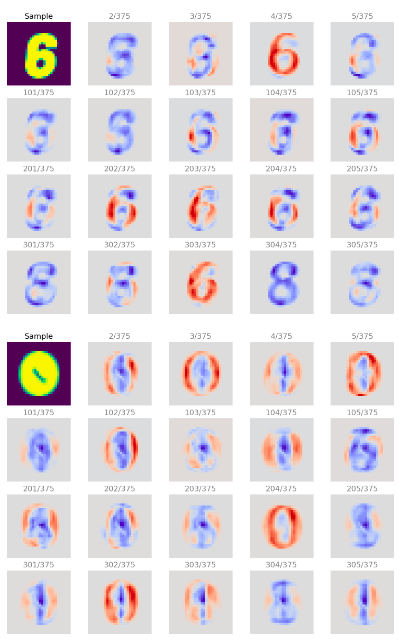
XtrAIn: Training-Guided Occlusion for Feature Attribution.
A method for the interpretation of Deep Neural Networks with the use of an occlusion-inspired, recursive rule, where the selection of the baseline value is driven by the model's updating states.
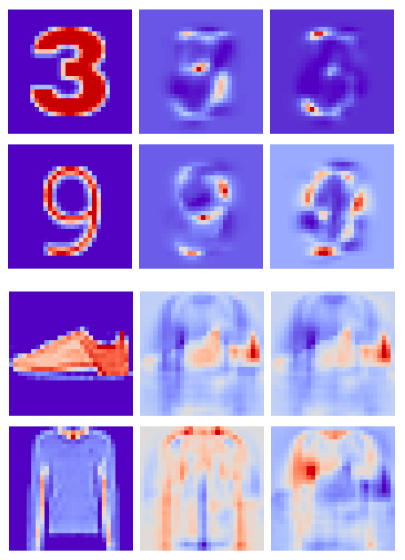
From Weight Perturbation to Feature Attribution for Explaining Fully Connected Neural Networks.
Interpreting FCNNs with the application of an occlusion-based distance measure, employed among the untrained and trained model states.

The Concept of Zero Information.
This thesis explores the concept of Zero Information, aiming to effectively and robustly conceal all information contained in parts or whole of an image for a particular model in hand.